Weight Loss After 40 GLP-1: Why It Gets Harder And The Natural Fix

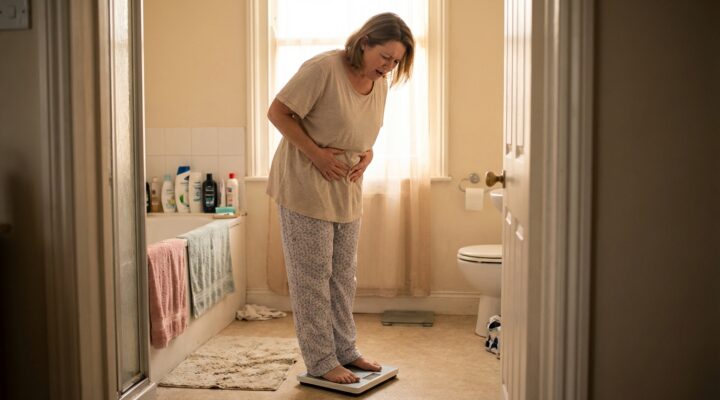
Weight loss after 40 GLP-1 decline is the single most overlooked biological reason why the weight you could once lose with moderate effort now refuses to budge no matter how hard you try.
And if you have been blaming yourself — telling yourself you lack discipline or willpower — you need to understand something critical right now.
The difficulty you are experiencing with weight loss after 40 is not a character flaw. It is a hormone problem. Specifically, it is a GLP-1 problem.
GLP-1 — glucagon-like peptide-1 — is the satiety hormone that controls whether you feel full after eating, whether cravings are manageable, and whether your body burns fat or stores it.
When GLP-1 levels are healthy, weight management feels relatively effortless.
When GLP-1 declines with age and metabolic dysfunction, weight loss after 40 becomes a constant battle against your own biology.
Weight Loss After 40 GLP-1
If you have heard of Ozempic, Wegovy, or Mounjaro — the weight loss injections producing headlines about dramatic results — you have heard about GLP-1.
Those injections work by artificially flooding your body with synthetic GLP-1 activity.
They produce weight loss not through willpower but through pharmacological manipulation of the exact hormone that naturally controls appetite and metabolism.
In this article you are going to discover exactly what GLP-1 is and how it controls weight loss after 40,
why GLP-1 levels decline with age and what that does to your metabolism, the hidden dangers of weight loss injections most people do not know about, the five signs your GLP-1 is already too low, and what science has discovered about raising GLP-1 naturally without needles or prescriptions.
What Is GLP-1 And Why Does It Control Weight Loss After 40?
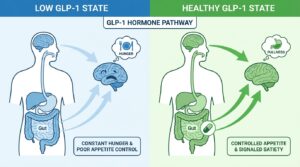
GLP-1 is a hormone produced in your gut after eating.
When you consume food, specialized intestinal cells called L-cells release GLP-1 into the bloodstream in response to nutrients being absorbed.
GLP-1 then travels to the brain
— specifically to the hypothalamus, which controls appetite
— and delivers a powerful satiety signal telling your brain that food has arrived and hunger can be reduced.
But GLP-1 does far more than just signal fullness.
It slows gastric emptying — the rate at which food moves from your stomach to your intestines — creating a prolonged feeling of satisfaction after meals.
It stimulates insulin release in response to elevated blood glucose, improving blood sugar regulation.
It reduces glucagon — the hormone that raises blood sugar — preventing the blood sugar swings that trigger intense cravings.
And it activates reward pathways in the brain that reduce the pleasure-driven eating that occurs even when you are not physically hungry.
When GLP-1 is functioning optimally, weight loss after 40 becomes manageable.
Weight Loss After 40 GLP-1
You naturally eat less.
You feel satisfied after reasonable portions.
Cravings for sugar and processed food are controllable.
Blood sugar stays stable.
Fat burning proceeds normally.
The body maintains a healthy weight without constant struggle.
When GLP-1 is deficient or not working properly, the opposite occurs.
Hunger never quite resolves after eating.
Cravings — especially for sugar, carbohydrates, and processed foods — feel overwhelming and constant.
Blood sugar swings produce energy crashes that drive further eating.
Fat burning slows. And the weight — particularly around the belly and waist — accumulates relentlessly regardless of effort.
This is the biological reality of weight loss after 40 GLP-1 decline that most people never have explained to them.
Why GLP-1 Declines After 40 And Destroys Weight Loss
Several converging factors reduce GLP-1 activity as we age, making weight loss after 40 progressively more difficult.
Insulin Resistance Reduces GLP-1 Effectiveness
When cells become resistant to insulin they also become less responsive to GLP-1 signaling.
The hormone is being produced but the satiety signal it sends is weakened.
Your brain receives a muffled message that does not adequately suppress appetite.
The result is constant hunger even after eating adequate calories.
Chronic Inflammation Impairs GLP-1 Production
Chronic low-grade inflammation — which increases with age and metabolic dysfunction — impairs the intestinal L-cells that produce GLP-1.
Inflamed gut tissue produces less GLP-1 in response to food, reducing the post-meal satiety signal that normally controls appetite.
Poor Gut Microbiome Health Reduces GLP-1
Beneficial gut bacteria stimulate GLP-1 release.
Weight Loss After 40 GLP-1
When gut microbiome diversity declines with age and processed food consumption, GLP-1 production decreases with it.
Research increasingly shows that the health of your gut microbiome directly influences your ability to produce adequate GLP-1 for weight management.
High-Sugar Diets Further Damage GLP-1 Sensitivity
The constant blood sugar spikes from refined carbohydrates and sugars dysregulate the insulin and GLP-1 response systems over time.
This creates a progressive metabolic dysfunction that makes appetite control and weight loss after 40 GLP-1 restoration increasingly difficult.
The Dark Truth About Weight Loss Injections
The enormous success of GLP-1 medications like Ozempic and Wegovy has made them tempting to many people struggling with weight loss after 40.
And they do work — by artificially stimulating GLP-1 receptors they dramatically reduce appetite and produce significant weight loss.
But there are serious problems with the injection approach that the $900 per month industry does not emphasize.
The Weight Comes Back When You Stop
These injections do not fix your metabolism.
They suppress it.
When you stop taking them, hunger floods back — often harder than before — and the weight returns.
For most people this creates a lifelong dependency that costs $900 per month or more.
This is not weight loss.
It is weight management through permanent pharmaceutical intervention.
The Side Effects Are Severe For Many Users
Weight Loss After 40 GLP-1
Up to 7 in 10 users experience nausea, vomiting, stomach cramps, and diarrhea.
More seriously, research has documented elevated risks of gastroparesis — stomach paralysis — as well as thyroid concerns, gallbladder issues, and pancreatic inflammation.
These are not theoretical risks.
They are documented in peer-reviewed research and listed in the medications’ own fine print.
Nobody Knows The Long-Term Effects
These medications are relatively new.
The long-term consequences of chronically manipulating GLP-1 receptor activity with synthetic compounds are not yet known.
Many people are choosing to be early participants in an experiment with unknown outcomes.
The Dependency Cycle Is By Design
These injections are marketed as lifelong treatments.
Miss a dose and appetite rebounds intensely — driving binge eating and guilt cycles that make the original problem worse.
The business model depends on permanent subscription.
The 5 Signs Your GLP-1 Is Too Low And Weight Loss After 40 Is Biologically Blocked
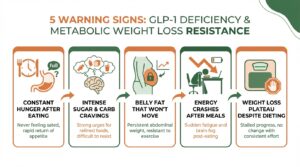
Because GLP-1 deficiency develops gradually, most people attribute its effects to aging or lack of willpower rather than recognizing them as symptoms of a correctable hormonal deficit.
Here are the five most telling signs that weight loss after 40 GLP-1 restoration is what you need.
1. You Never Feel Truly Full After Eating
If you finish a reasonable meal and still feel hungry within an hour — or if you never quite reach the satisfaction that should follow eating — your GLP-1 satiety signal is insufficient.
The fullness that should follow eating is not reaching your brain with adequate strength. This is not psychological. It is biological.
2. You Experience Intense and Uncontrollable Cravings for Sugar and Carbohydrates
If cravings for sugar, bread, pasta, and processed food feel overwhelming — particularly in the evenings — low GLP-1 combined with poor blood sugar regulation is driving those cravings neurochemically.
Willpower is not designed to override sustained neurochemical drives.
The craving is real and biological.
3. You Have Stubborn Belly and Waist Fat That Does Not Respond to Diet or Exercise
The midsection accumulation of fat that becomes so resistant after 40 is directly related to the metabolic dysfunction that GLP-1 deficiency produces — including insulin resistance, cortisol elevation, and impaired fat metabolism.
Standard diet and exercise approaches have limited effect on hormonally-driven visceral fat when weight loss after 40 GLP-1 levels are insufficient.
Weight Loss After 40 GLP-1
4. You Experience Energy Crashes After Meals
If you consistently feel tired, foggy, or lethargic after eating — particularly after carbohydrate-heavy meals — your blood sugar regulation is impaired.
GLP-1 deficiency contributes to the blood sugar spikes and crashes that produce post-meal energy collapses.
5. You Have Hit a Weight Loss Plateau Despite Genuine Effort
If you are eating reasonably and exercising but the scale simply refuses to move — or you lose a few pounds and immediately regain them — your metabolic set point has shifted in a direction that conventional caloric restriction cannot override.
GLP-1 deficiency and insulin resistance have reset the metabolism around a higher weight that the body now actively defends.
What Science Has Discovered About Raising GLP-1 Naturally For Weight Loss After 40
Here is the genuihnely good news that most people struggling with weight loss after 40 GLP-1 decline have not heard yet.
As of recent years, scientists have identified specific natural compounds that can safely and meaningfully increase GLP-1 levels — without injections, without prescriptions, and without the severe side effects of pharmaceutical GLP-1 receptor agonists.
Berberine — a plant compound found in several botanical species — has been shown in human clinical trials to reduce fat storage, improve insulin sensitivity, and activate AMPK — the body’s master fat-burning enzyme.
Ceylon Cinnamon Bark Extract has been clinically shown to raise GLP-1 levels after meals by up to 36 percent — helping produce the satiety signal that post-meal fullness depends on.
It also supports smoother blood sugar curves that prevent the spikes and crashes driving cravings.
Gynostemma Pentaphyllum activates AMPK — the same metabolic master switch that berberine targets — specifically promoting the burning of stubborn belly and waist fat that weight loss after 40 makes so resistant.
Bitter Melon Extract stimulates natural GLP-1 production through gut receptors, helping control appetite and reduce cravings from the hormone production side of the equation.
When these compounds are combined in the right formulation, the result is a natural approach to GLP-1 support that produces many of the appetite-controlling and fat-burning effects of prescription injections
The Bottom Line: Weight Loss After 40 Is a Hormone Problem — Not a Willpower Problem
If you recognized yourself in the five warning signs above, please understand this clearly.
Your weight gain is not a character flaw.
It is not evidence that you are lazy or undisciplined.
It is a biological consequence of declining GLP-1 and the metabolic dysfunction that GLP-1 deficiency produces.
And hormone problems have solutions.
Natural solutions that work with your body rather than suppressing it.
Solutions that restore the biological function healthy weight management depends on.
If you’re struggling with stubborn weight gain and feel like nothing works anymore, you’re not alone.
What most people don’t realize is that after a certain age, your body stops responding the same way to diets and workouts — and that’s exactly where the real problem begins.
The truth behind Weight Loss After 40: The GLP-1 Breakthrough Changing Everything is that your metabolism needs a different kind of support.
That’s why many people are now turning to solutions designed to activate this specific pathway and help control hunger, cravings, and fat storage more effectively.
👉 If you want to see how this works and whether it’s right for you, check out the solution many are already using to finally take back control of their weight.
Click here to read the full Slimlex GLP-1 and discover the natural GLP-1 solution
Your weight struggle is not your fault. But the solution is within reach. Take action today.
Disclaimer: This article is for informational and educational purposes only. It is not intended to diagnose, treat, cure, or prevent any disease. Always consult with a qualified healthcare professional before starting any new supplement.
Leave a Reply