
Prostate Growth Explained: Why Your PSA Level Tells Only Half the Story

Did you know that 75% of PSA tests result in false positives? If you’re a man over 50 concerned about prostate health, you’re not alone. More than half of men in this age group experience some degree of prostate enlargement, and many rely solely on PSA screening to monitor their prostate health.
Here’s the problem: PSA tests measure only one protein marker and miss critical factors driving prostate growth. While your doctor focuses on prostate-specific antigen levels, they may be overlooking hormonal imbalances, chronic inflammation, and cellular changes that truly affect your prostate health.
In this article, you’ll discover the science behind prostate growth, why PSA numbers don’t tell the complete story, and the five biological factors that really matter for maintaining a healthy prostate as you age.
What Is Prostate Growth and Why Does It Happen?
The prostate is a small, walnut-sized gland located just below the bladder in men. Its primary function is producing seminal fluid that nourishes and transports sperm. As men age, the prostate naturally grows larger, a condition called benign prostatic hyperplasia (BPH).
By age 60, approximately 50% of men show signs of BPH. By age 85, that number jumps to 90%. This enlargement isn’t cancer, but it can cause bothersome urinary symptoms including frequent urination, weak urine stream, difficulty starting urination, and nighttime bathroom trips.
The key question isn’t whether your prostate will grow—it’s understanding what drives that growth and how to manage it effectively.
The PSA Test: What It Measures and What It Misses
PSA (prostate-specific antigen) is a protein produced by prostate cells and released into the bloodstream. The PSA test measures the amount of this protein in your blood, with higher levels potentially indicating prostate problems.
Traditionally, doctors considered PSA levels under 4 ng/mL as normal. However, research shows this approach is overly simplistic. PSA levels naturally increase with age, and numerous factors besides cancer can elevate PSA readings.
According to studies from major urology centers, PSA levels can rise due to:
- Benign prostatic hyperplasia (BPH) – non-cancerous prostate enlargement
- Prostatitis – inflammation or infection of the prostate
- Urinary tract infections
- Recent sexual activity or ejaculation
- Vigorous exercise, especially cycling
- Digital rectal exam performed before the test
- Certain medications
Research indicates that up to 86% of men with BPH show elevated PSA levels, even though they don’t have cancer. This means PSA alone cannot distinguish between benign prostate growth and malignant changes.
Even more concerning, some men with low PSA levels still harbor clinically significant prostate cancer. The PSA test has a false positive rate of 25-30%, leading to unnecessary anxiety, additional testing, and potentially invasive procedures.
What Really Causes Prostate Growth: The Hidden Factors
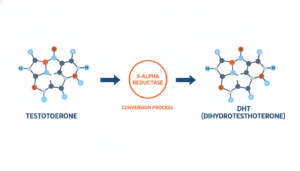
While PSA measures one protein marker, prostate growth actually results from a complex interplay of hormonal, inflammatory, and genetic factors that standard screening often misses.
The DHT Connection: The Primary Driver of Prostate Growth
The most significant factor in prostate enlargement isn’t testosterone itself, but rather DHT (dihydrotestosterone)—a hormone derived from testosterone through an enzyme called 5-alpha reductase.
DHT is approximately 5 times more potent than testosterone at stimulating prostate cell growth. As men age, even if testosterone levels decline, the conversion to DHT and the prostate’s sensitivity to DHT actually increase.
This explains why older men with lower testosterone can still experience significant prostate growth. The problem isn’t the total testosterone amount—it’s the conversion rate to DHT and how aggressively DHT binds to prostate cell receptors.
Research shows that men with higher 5-alpha reductase enzyme activity experience more rapid prostate growth and more severe BPH symptoms. This is why medications that block this enzyme (like finasteride) can effectively reduce prostate size.
Chronic Inflammation: The Silent Contributor
Chronic inflammation plays a major role in prostate enlargement that PSA tests don’t measure. Inflammatory markers in prostate tissue can accelerate cell growth by up to 40%.
Inflammation in the prostate can result from:
- Previous urinary tract infections
- Autoimmune conditions
- Dietary factors (high in processed foods, low in anti-inflammatory nutrients)
- Oxidative stress from aging
- Environmental toxins
Studies indicate that men with higher levels of inflammatory markers show significantly larger prostate volumes and worse urinary symptoms, regardless of their PSA levels.
Age-Related Hormonal Changes
Beyond DHT, several other hormonal shifts contribute to prostate growth:
Estrogen accumulation: As men age, testosterone decreases while estrogen levels remain stable or even increase. This changing ratio favors prostate cell proliferation.
Insulin and growth factors: Elevated insulin levels and insulin-like growth factors (IGF) stimulate prostate tissue growth. This connects prostate health directly to metabolic health and diet.
Stress hormones: Chronic elevation of cortisol and other stress hormones can promote inflammation and hormonal imbalances that affect prostate size.
Genetic and Cellular Factors
Genetic predisposition plays a role in how quickly and severely a man’s prostate grows. Men with first-degree relatives (father or brother) who have prostate issues face 2-3 times higher risk of developing BPH themselves.
At the cellular level, prostate growth involves:
- Reduced programmed cell death (apoptosis)
- Increased cell proliferation rates
- Changes in cell receptor sensitivity to hormones
- Accumulation of senescent cells that promote inflammation
Beyond PSA: Better Ways to Assess Prostate Health
Given the limitations of PSA testing alone, comprehensive prostate health assessment should include multiple markers and measurements.
Free PSA to Total PSA Ratio
This test distinguishes between free-floating PSA and PSA bound to proteins. A lower ratio (less than 25%) suggests higher cancer risk, while a higher ratio indicates BPH is more likely the cause of elevated PSA.
PSA Density
PSA density compares your PSA level to your prostate volume (measured via ultrasound). A higher density suggests more aggressive disease, while lower density typically indicates benign growth.
PSA Velocity
Tracking how quickly PSA rises over time provides more insight than a single measurement. A rapid increase (more than 0.75 ng/mL per year) warrants closer evaluation, even if the absolute PSA number isn’t particularly high.
Prostate Volume Measurement
Direct measurement of prostate size through transrectal ultrasound or MRI gives concrete information about enlargement independent of PSA levels.
Advanced Biomarkers
Newer tests measure additional markers:
- Prostate Health Index (PHI)
- 4K score
- PCA3 urine test
- SelectMDx urine test
These tests improve cancer detection accuracy and reduce unnecessary biopsies.
Multiparametric MRI
Advanced imaging provides detailed views of prostate structure, helping identify suspicious areas that warrant biopsy while avoiding unnecessary procedures for clearly benign tissue.
What You Can Do: Natural and Medical Approaches to Support Prostate Health

Multiple testing methods provide a more complete picture of prostate health than PSA levels alone.
Understanding the true drivers of prostate growth empowers you to take targeted action beyond simply monitoring PSA numbers.
Dietary Approaches
Research supports several dietary strategies:
Increase anti-inflammatory foods: Tomatoes (lycopene), cruciferous vegetables, omega-3 fatty acids, green tea, and turmeric all show promise in supporting prostate health.
Reduce processed foods: High-sugar, high-fat processed foods promote inflammation and insulin resistance, both of which can accelerate prostate growth.
Maintain healthy weight: Obesity correlates with larger prostate size and more severe symptoms.
Natural DHT-Blocking Compounds
Several natural supplements show evidence of reducing DHT activity:
Saw palmetto: Studies suggest it may inhibit 5-alpha reductase, the enzyme converting testosterone to DHT.
Beta-sitosterol: This plant compound improves urinary symptoms and flow rates in men with BPH.
Pygeum: African cherry bark extract reduces nighttime urination and improves urine flow.
Pumpkin seed extract: Contains compounds that may support healthy prostate size.
Zinc: This mineral plays a role in regulating 5-alpha reductase activity.
Lifestyle Modifications
Simple lifestyle changes support prostate health:
- Regular exercise (30+ minutes daily)
- Stress reduction through meditation or yoga
- Adequate sleep (7-8 hours nightly)
- Limiting alcohol and caffeine, especially in evening
- Pelvic floor exercises to improve bladder control
Medical Interventions
When natural approaches aren’t sufficient, several medical options exist:
Alpha-blockers: Relax prostate and bladder muscles to improve urine flow.
5-alpha reductase inhibitors: Block DHT production to shrink prostate size.
Combination therapy: Using both types of medication for enhanced effectiveness.
Minimally invasive procedures: Including laser therapy, microwave therapy, or steam treatment for significant enlargement.
When to See a Urologist
While many men successfully manage mild BPH symptoms with lifestyle changes and natural approaches, certain warning signs require professional evaluation:
- Inability to urinate
- Blood in urine
- Severe pain during urination
- Urinary tract infections
- Bladder stones
- Kidney problems from blocked urine flow
- PSA rising rapidly (more than 0.75 ng/mL yearly)
- PSA above 10 ng/mL
- Abnormal digital rectal exam findings
The Bottom Line: Taking a Comprehensive Approach to Prostate Health
Prostate growth is far more complex than a single PSA number suggests.
While PSA testing provides valuable screening information, it represents only one piece of the puzzle.
The most important factors driving prostate enlargement—DHT levels, chronic inflammation, hormonal balance, and cellular changes—require a more comprehensive assessment and multi-faceted management approach.
By understanding these underlying mechanisms, you can work with your healthcare provider to develop a personalized strategy that addresses root causes rather than simply monitoring a single biomarker.
If you’re experiencing urinary symptoms or concerned about prostate health, don’t rely on PSA alone.
Request comprehensive testing including free PSA ratio, prostate volume measurement, and advanced biomarkers.
Consider both natural approaches targeting DHT and inflammation alongside medical options when necessary.
Most importantly, remember that prostate health connects directly to overall metabolic health, diet, stress levels, and lifestyle choices.
A holistic approach addressing these factors offers the best chance of maintaining a healthy prostate as you age.
Want to learn about a natural solution that targets DHT, inflammation, and hormonal balance?
Check out our comprehensive review of the top prostate supplements specifically formulated to address these root causes and support healthy prostate function.
Ready to Take Control of Your Prostate Health?
Now that you understand why PSA levels don’t tell the complete story and what really drives prostate growth—DHT, inflammation, and hormonal imbalances—it’s time to take action.
Introducing ProstaVive: The Most Potent, Fast-Acting Formula for Prostate Health & Strong Flow
ProstaVive is specifically designed to target the root causes we discussed in this article:
✅ Blocks DHT production – Addresses the primary driver of prostate enlargement
✅ Reduces inflammation – Targets chronic inflammation that accelerates prostate growth
✅ Supports healthy hormone balance – Helps maintain optimal testosterone-to-estrogen ratios
✅ Improves urinary flow – Notice results in as little as 2-4 weeks
✅ Reduces nighttime urination – Get better sleep without constant bathroom trips
Unlike generic prostate supplements, ProstaVive combines the most clinically-studied ingredients in optimal doses to deliver fast, noticeable results.
Read our complete ProstaVive review here →Prostavive Official Website
Discover how ProstaVive’s unique formula addresses all five factors affecting prostate health that PSA tests completely miss.
Leave a Reply