Blood Pressure and Blood Sugar Control: How to Support Heart Health Naturally

Blood Pressure Blood Sugar Control is one of the most critical health priorities for adults over 40 — yet most people only take it seriously after a diagnosis. Both conditions develop silently for years, causing internal damage to blood vessels, nerves, kidneys, and the heart while producing no obvious symptoms whatsoever.
Blood pressure and blood sugar control are two of the most critical and most overlooked pillars of long-term health in men and women over 40.
Together, they govern how efficiently your heart works, how much energy your body produces, how well your brain functions, and how quickly your organs age.
Most people feel completely fine — right up until they don’t.
These two conditions are often called silent killers precisely because they cause no pain, no obvious symptoms, and no warning in their early stages.
By the time most people discover their blood pressure or blood sugar is dangerously elevated, significant internal damage has already been building for years.
This article explains what is actually happening inside your body when these systems go out of balance, what the early warning signs look like, and what natural strategies have the strongest clinical evidence for restoring and maintaining control.
Blood Pressure and Blood Sugar Control: Why These Two Are Always Connected
Most people think of blood pressure and blood sugar as separate health concerns managed by separate doctors.
In reality, they are deeply interconnected — driven by many of the same biological mechanisms and worsened by the same lifestyle factors.
High blood pressure — clinically called hypertension — forces the heart to work harder with every beat.
Over time, this strains and damages the arterial walls, reduces their elasticity, and creates the conditions for heart attack and stroke.
But what most people don’t know is that elevated blood sugar accelerates arterial damage at the same time. Glucose molecules in excess literally glycate — attach to — proteins in artery walls, making them stiffer, less responsive, and more prone to plaque buildup.
This means that a person with both elevated blood pressure and elevated blood sugar is not dealing with two separate problems that simply add together.
They are dealing with a synergistic process where each condition accelerates the damage caused by the other.
The arterial and cardiovascular harm compounds.
This is why addressing blood pressure and blood sugar control together — as a unified metabolic priority — produces far better outcomes than treating each in isolation.
What Is Actually Happening: The Biology of Both Conditions

Understanding Blood Pressure
Your heart pumps blood through a vast network of arteries, veins, and capillaries with every beat.
Blood pressure is the force that blood exerts against the walls of these vessels as it moves through them.
It is measured in two numbers — systolic (the pressure during a heartbeat) and diastolic (the pressure between beats).
Normal blood pressure is around 120/80 mmHg.
When pressure rises above 130/80 consistently, it is classified as hypertension
Stage 1. Above 140/90 is
Stage 2. Many people remain in the 130–150 systolic range for years without any symptoms whatsoever
— while arterial damage accumulates silently.
What drives blood pressure up? Several interconnected factors:
Arterial stiffness: As we age and as chronic inflammation builds, arteries lose their natural elasticity.
Stiff arteries cannot expand and contract efficiently with each heartbeat, forcing pressure upward.
Sodium and fluid retention:
Excess sodium — extremely common in Western diets — causes the kidneys to retain more water, increasing blood volume and therefore pressure throughout the circulatory system.
Chronic stress and cortisol:
Stress hormones constrict blood vessels and raise heart rate.
When stress becomes chronic rather than occasional, blood pressure stays persistently elevated.
Excess body weight:
Adipose tissue — particularly visceral fat — requires its own blood supply and also releases inflammatory compounds that stiffen arteries and raise pressure.
Low nitric oxide production:
Nitric oxide is the molecule that signals blood vessels to relax and dilate.
After 40, nitric oxide production declines significantly — one of the primary biological reasons blood pressure tends to rise with age.
Understanding Blood Sugar
Your body uses glucose — derived from the carbohydrates and sugars you eat — as its primary fuel source.
Insulin, a hormone produced by the pancreas, is responsible for moving glucose from the bloodstream into cells where it can be burned for energy.
When you consistently consume high amounts of refined carbohydrates and sugars
— the hallmark of the modern Western diet
— your cells become progressively less responsive to insulin’s signal.
This is insulin resistance, and it develops silently over a decade or more before blood sugar becomes formally elevated.
During this pre-diabetic phase, the pancreas compensates by producing more and more insulin, trying to force glucose into resistant cells.
Eventually it cannot keep up.
Blood glucose remains chronically elevated — and the damage begins.
Chronically high blood sugar causes glycation of proteins throughout the body, generates massive oxidative stress, inflames and narrows blood vessels, damages kidney filtration units, destroys nerve fibers in the extremities, and directly raises blood pressure by reducing nitric oxide bioavailability.
The connection is not incidental.
It is biochemical and bidirectional: high blood pressure worsens insulin resistance, and high blood sugar worsens blood pressure.
They feed each other.
For men and women looking for a formula that targets both cardiovascular function and glucose metabolism together, CardioNEX Glucose Management is one of the options specifically formulated around this dual approach.
Who Is Most at Risk After 40
After age 40, a set of biological changes converges to make blood pressure and blood sugar control significantly more challenging:
Declining testosterone in men reduces insulin sensitivity and allows visceral fat accumulation
— the same fat that drives both insulin resistance and hypertension.
Declining estrogen in women after menopause removes a significant cardioprotective effect, causing blood pressure to rise more steeply in the years following menopause than at any other period of a woman’s life.
Loss of muscle mass
— occurring at a rate of 3 to 8 percent per decade without resistance training
— reduces the body’s primary site of glucose disposal, pushing blood sugar higher.
Chronic low-grade inflammation
— driven by poor diet, sedentary lifestyle, sleep deprivation, and accumulated metabolic stress
— stiffens arteries, impairs insulin signaling, and keeps both blood pressure and blood sugar elevated.
Reduced kidney efficiency means the kidneys become less effective at filtering sodium and regulating fluid balance
— a direct driver of hypertension in older adults.
These changes don’t happen overnight.
They accumulate over years.
And because none of them cause obvious pain or visible symptoms, most people are completely unaware until they receive a diagnosis.
Early Warning Signs Most People Overlook
Because blood pressure and blood sugar conditions develop gradually and silently, the early warning signs are subtle — and easy to dismiss as normal aging.
But they are your body’s genuine signals:
Persistent fatigue even after adequate sleep — cells not receiving glucose efficiently, or poor oxygen delivery from compromised circulation.
Frequent headaches, particularly in the morning or at the back of the head — a classic but often ignored sign of elevated blood pressure.
Increased thirst and frequent urination — the kidneys working overtime to filter excess glucose from the blood.
Blurred vision or occasional visual disturbances — elevated blood pressure or blood sugar affecting the delicate blood vessels of the retina.
Difficulty concentrating and brain fog — the brain requires a constant, stable supply of glucose and oxygen;
disruptions in either produce measurable cognitive impairment.
Mild dizziness or lightheadedness when standing
— can indicate circulatory instability related to blood pressure dysregulation.
Tingling or numbness in hands and feet — early peripheral neuropathy from chronically elevated blood sugar damaging nerve fibers.
Wounds or bruises that heal more slowly than expected — compromised circulation and immune function.
Waking frequently at night — both hypertension and blood sugar dysregulation disrupt sleep architecture, though most people attribute this to other causes.
If three or more of these symptoms are familiar, blood pressure and blood sugar testing is not optional — it is urgent.
The Long-Term Consequences of Ignoring Both
Without effective blood pressure and blood sugar control, the downstream consequences are severe and well-documented:
Cardiovascular disease:
Hypertension and diabetes together create a risk of heart attack and stroke that is exponentially — not just additively — higher than either condition alone.
Kidney disease:
Both conditions damage the kidneys’ filtration units. Diabetic nephropathy is among the leading causes of kidney failure requiring dialysis in the United States.
Peripheral neuropathy: Nerve damage in the feet and hands caused by vascular and glucose-related damage affects up to 70% of people with long-standing diabetes.
Vision loss: Hypertensive retinopathy and diabetic retinopathy are among the most common causes of new blindness in adults.
Cognitive decline: Chronically elevated blood pressure is one of the strongest modifiable risk factors for dementia and Alzheimer’s disease.
High blood sugar independently accelerates brain aging.
Sexual dysfunction: Both conditions damage the blood vessels and nerves required for normal erectile function in men and sexual response in women.
These are not distant, abstract risks.
They are the clinical reality for millions of people who did not address blood pressure and blood sugar control early enough.
Natural Strategies With the Strongest Evidence
The most encouraging finding in recent metabolic research is that blood pressure and blood sugar respond remarkably well to targeted lifestyle intervention — particularly in the early and moderate stages. These are not minor improvements.
Studies consistently show that the right combination of dietary, exercise, and supplementation strategies can produce changes comparable to pharmaceutical intervention.
Dietary Changes That Move the Needle

The DASH diet is the most clinically validated dietary approach for blood pressure and blood sugar control — reducing systolic pressure by up to 14 mmHg with consistent adherence.
The DASH diet — Dietary Approaches to Stop Hypertension — is the most clinically validated dietary pattern for blood pressure reduction.
It emphasizes vegetables, fruits, whole grains, lean protein, and low-fat dairy while dramatically reducing sodium, added sugars, and processed foods.
Studies show the DASH diet can reduce systolic blood pressure by 8 to 14 mmHg — a clinically meaningful reduction.
For blood sugar, eliminating refined carbohydrates and added sugars is the single most impactful dietary change.
Replacing them with high-fiber whole foods slows glucose absorption, reduces post-meal blood sugar spikes, and — over time — improves insulin sensitivity significantly.
Reducing sodium intake is specifically critical for blood pressure. Most Americans consume 3,400 mg of sodium daily — nearly double the recommended maximum.
Reducing to under 2,300 mg can produce meaningful blood pressure reductions within weeks.
Exercise: The Most Powerful Natural Intervention
Regular physical activity improves both blood pressure and blood sugar through multiple mechanisms simultaneously.

Aerobic exercise — walking, cycling, swimming — directly lowers blood pressure by improving arterial elasticity and stimulating nitric oxide production.
Even 30 minutes of moderate walking five days per week produces measurable reductions in systolic blood pressure.
Resistance training is specifically critical for blood sugar control.
Building and maintaining muscle mass increases the body’s capacity to absorb and utilize glucose — the primary driver of insulin sensitivity.
Men and women over 50 who engage in resistance training twice per week maintain significantly better blood sugar regulation than sedentary peers.
Stress Management and Sleep
Chronic stress elevates cortisol — which raises blood pressure directly and worsens insulin resistance simultaneously.
Techniques with the strongest evidence base include regular physical activity, mindfulness meditation, adequate social connection, and consistent sleep schedules.
Sleep is particularly critical and consistently underestimated.
Even one week of sleeping fewer than six hours per night measurably increases insulin resistance and raises blood pressure.
Optimizing sleep quality and duration is one of the most impactful — and most overlooked — interventions for blood pressure and blood sugar control.
Evidence-Based Natural Compounds
Several natural compounds have accumulated meaningful clinical evidence for supporting blood pressure and blood sugar regulation:
Berberine:
Extracted from several plants including barberry and goldenseal, berberine has extensive clinical evidence for blood sugar regulation
— with multiple trials showing effects on HbA1c comparable to metformin.
It activates AMPK, an enzyme that plays a central role in glucose metabolism and insulin sensitivity.
Magnesium:
Deficiency is extremely common in adults eating a Western diet — and magnesium is involved in over 300 enzymatic reactions including glucose metabolism and vascular tone regulation. Supplementation consistently shows modest but meaningful reductions in both blood pressure and fasting glucose.
Coenzyme Q10 (CoQ10):
A powerful antioxidant that supports mitochondrial energy production and has documented effects on blood pressure in multiple clinical trials
— with meta-analyses showing average reductions of 11 mmHg systolic and 7 mmHg diastolic with consistent use.
L-Arginine and L-Citrulline:
These amino acids are precursors to nitric oxide — the molecule responsible for blood vessel relaxation and dilation.
Supplementation with L-Citrulline in particular has shown consistent blood pressure-lowering effects in clinical trials.
Omega-3 Fatty Acids:
EPA and DHA from fish oil have well-documented anti-inflammatory and blood pressure-lowering effects.
A 2022 meta-analysis confirmed that omega-3 supplementation produces significant reductions in both systolic and diastolic blood pressure.
Chromium Picolinate:
Enhances the sensitivity of insulin receptors, helping cells respond more efficiently to insulin’s signal.
Particularly useful for people in the pre-diabetic or early insulin-resistant stage.
Ceylon Cinnamon:
Slows gastric emptying and glucose absorption, reducing post-meal blood sugar spikes.
Studies using true Ceylon cinnamon (not the more common Cassia variety) show meaningful improvements in fasting glucose and insulin sensitivity.
Testing:
Know Your Numbers
If you are over 40 and have not checked these markers recently, do it now.
The information is quick to obtain and potentially life-saving:
Blood pressure:
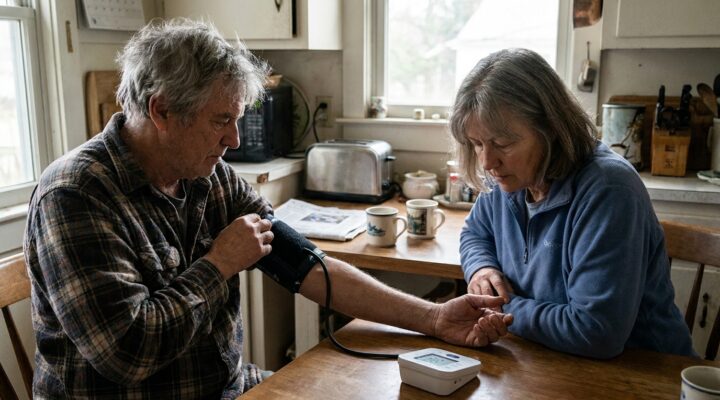
A home blood pressure monitor is one of the most valuable health investments any adult over 40 can make.
Take readings in the morning before food or caffeine, and again in the evening, for at least three consecutive days to establish a reliable baseline.
Fasting blood glucose:
The basic blood sugar screening test — should be under 100 mg/dL. Between 100 and 125 indicates pre-diabetes.
HbA1c:
Reflects average blood sugar over the past three months. Under 5.7% is normal; 5.7 to 6.4% is pre-diabetes; 6.5% and above is diabetes.
Fasting insulin: Not routinely ordered but extremely valuable — elevated fasting insulin indicates insulin resistance years before blood glucose becomes abnormal.
Lipid panel:
Total cholesterol, LDL, HDL, and triglycerides — triglycerides in particular are closely linked to blood sugar dysregulation.
C-reactive protein (CRP): A marker of systemic inflammation — elevated CRP is associated with both hypertension and insulin resistance and can serve as an early warning signal.
Final Thoughts on Blood Pressure and Blood Sugar Control
Blood pressure and blood sugar control are not optional health priorities for adults over 40.
They are foundational. Everything else — energy, cognition, sexual health, longevity, and quality of life — depends on how well these systems function.
The men and women who navigate their 60s and 70s with vitality and independence are not simply lucky.
They are the ones who paid attention to the early signals, took their numbers seriously, and consistently applied the strategies that science has validated — dietary discipline, regular movement, stress management, quality sleep, and targeted nutritional support.
The window for meaningful, natural intervention is widest in the early stages.
Every year of unaddressed metabolic imbalance is a year of accumulated damage that becomes harder to reverse.
If your numbers are already moving in the wrong direction — act now.
The biology is on your side, but only if you use it.
Those looking for a dedicated blood sugar support formula to complement their dietary and lifestyle changes may find
Medical Disclaimer:
This article is for educational and informational purposes only and does not constitute medical advice. It is not intended to diagnose, treat, cure, or prevent any disease or health condition. Always consult a qualified healthcare professional before making any changes to your diet, lifestyle, or supplement routine. Individual results may vary. These statements have not been evaluated by the FDA.
Affiliate Disclosure: Turbo Reviews participates in affiliate marketing programs. This article may contain affiliate links, which means we may earn a commission if you click through and make a purchase — at no additional cost to you. Our editorial content is not influenced by affiliate relationships.
Leave a Reply