
Why You Feel Bloated and Exhausted: The Toxic Backup Your Body Can’t Clear on Its Own

Bloating and exhaustion are two of the most common complaints among people who feel like their body has simply stopped working the way it’s supposed to.
Have you ever woken up feeling okay, only to look in the mirror by lunchtime and see a stomach that looks completely swollen? You didn’t overeat.
You didn’t do anything wrong. But there it is — tight, uncomfortable, and impossible to ignore.
This isn’t just a bad day. For millions of people, this is a daily reality.
The heaviness, the bloating, the bone-deep exhaustion that no amount of coffee can fix.
It feels like your body has simply stopped working the way it’s supposed to.
And here’s the truth most people never hear: your digestive system isn’t just “slow.” It’s stuck. And until you understand exactly why it’s stuck, nothing you try — no diet, no supplement, no amount of willpower — is going to fix it.
In this article, we’re going to break down exactly what’s happening inside your body, why your gut and liver are trapped in a cycle that keeps you feeling heavy and drained, and what it actually takes to get the system moving again.
What’s Actually Happening Inside Your Digestive System
Let’s start with the basics. When you eat food, your body is supposed to break it down, absorb the nutrients, and move the waste out efficiently.
The whole process — from the first bite to the last exit — should take roughly 24 to 72 hours.
But for a huge number of people, that timeline has completely broken down.
When your colon absorbs too much water or the muscles along your intestinal tract move too slowly, waste doesn’t leave when it should.
It sits. It hardens. It builds up. And what started as a minor inconvenience turns into something much more serious.
This is what’s commonly referred to as a “toxic backup” — and it’s one of the most underestimated causes of chronic bloating, fatigue, and digestive discomfort.
When waste stays in your body too long, it doesn’t just sit there quietly.
It begins to release compounds that affect everything from your skin clarity to your mental sharpness to your overall energy levels.
The heaviness you feel isn’t imaginary. It’s your body carrying waste it was never designed to hold onto.
The Gut-Liver Connection: Why This Is More Than Just a Stomach Problem
Here’s where most people get completely lost. When they think about bloating and digestion, they think stomach.
Maybe intestines. But the real power player behind how efficiently your body processes and eliminates waste is your liver — and most people have no idea how deeply connected these two systems are.
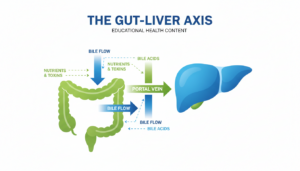
The relationship between your gut and your liver is called the Gut-Liver Axis.
Think of it as a two-way highway. Your gut sends everything it absorbs — nutrients, toxins, bacterial byproducts — straight to your liver through a vein called the portal vein.
And your liver sends back bile, a digestive fluid that is critical for breaking down fats and keeping waste moving through your intestines.
When this highway works properly, digestion feels effortless. When it breaks down, everything falls apart.
The Liver: Where the Breakdown Begins
Your liver is responsible for producing bile — a fluid that acts as a natural lubricant for your intestinal tract. Without enough bile, waste can’t move smoothly.
It gets stuck. It dries out. And the cycle of constipation and bloating begins.
But bile production isn’t the only thing your liver handles. It’s also the body’s primary detoxification center.
Every single day, your liver filters hundreds of different toxins — from the food you eat, the water you drink, and the environment around you.
When the liver becomes overloaded or congested, it can no longer keep up with its two biggest jobs: producing enough bile and filtering out toxins effectively.
The result is a sluggish liver that can’t provide the metabolic energy your body needs to convert food into fuel.
Instead of energy, you get chronic fatigue. Instead of a flat stomach, you get stubborn bloating that won’t go away no matter what you eat or don’t eat.
Research consistently shows that even minor inefficiencies in liver function can disrupt the gut microbiome — the trillions of bacteria that live in your intestines and play a critical role in digestion. When the liver struggles, the gut follows.
And once the gut is out of balance, the liver has to work even harder to compensate. It becomes a vicious cycle.
The Gut: Where Fermentation Takes Over
When the Gut-Liver Axis is compromised, your body loses its ability to break down proteins and fats the way it’s supposed to.
Undigested food doesn’t disappear — it sits in your intestinal tract and begins to ferment.
Fermentation is the process where “bad” bacteria in your gut feed on undigested food and produce gas as a byproduct.
This is what causes that uncomfortable, distended feeling you get immediately after eating — the sensation of being inflated from the inside out.
This isn’t just an aesthetic problem. Post-meal bloating of this kind is a direct sign that your digestive system is not processing food efficiently.
And every time it happens, more undigested material accumulates, more harmful bacteria thrive, and the toxic backup grows.
The Flip: From Constipation to Urgency
One of the most frustrating parts of a compromised digestive system is how unpredictable it becomes. One day you feel completely backed up.
The next, you’re rushing to the bathroom with no warning.
This pattern — swinging between constipation and sudden urgency — is one of the clearest signs of what’s called gut dysbiosis.
It means the lining of your intestine has become so irritated by toxins and undigested material that your body essentially panics.
In an attempt to protect itself, your body tries to flush out the irritants as fast as possible. This leads to urgent, uncomfortable bathroom trips and, worse, nutrient malabsorption.
Even if you’re eating well, your body isn’t actually absorbing the vitamins and minerals it needs.
The result is even more exhaustion, even more bloating, and an even deeper sense that something is fundamentally wrong.
The Hidden Consequences Nobody Talks About
A digestive system that’s stuck in this cycle doesn’t just cause physical discomfort.
It quietly dismantles your quality of life in ways you might not even connect to your gut health.
Heartburn becomes a constant companion as stomach acid reacts to food that isn’t moving the way it should.
Brain fog settles in because your body isn’t getting the nutrients it needs to fuel clear thinking.
Your skin starts to show it — breakouts, dullness, and irritation that no skincare product can fix because the problem is happening on the inside.
And then there’s the emotional toll. When you can’t predict how your stomach is going to behave, you start avoiding situations.
You skip meals when you’re out. You stop making plans that involve eating.
You build your entire day around managing your digestion instead of living your life.
That’s not living. That’s surviving. And it doesn’t have to stay that way.
What Does It Actually Take to Break This Cycle?
The good news is that the Gut-Liver Axis is not permanently broken. It’s stuck — and stuck things can be unstuck.
But the key is addressing the right targets.
Generic fiber supplements or basic probiotics aren’t enough if the underlying problem is a sluggish liver that isn’t producing enough bile and a gut that’s been overtaken by harmful bacteria.
What actually needs to happen is a reset that works on both sides of the equation at the same time.
You need something that supports bile production to get waste moving again, calms the inflammation that’s been building in the intestinal lining, restores the balance of good bacteria in the gut, and helps the liver clear the toxic buildup that’s been accumulating for months or even years.
This means targeting the Gut-Liver Axis directly — not just one side of it.
5 Signs Your Body Is Already Telling You It Needs Help
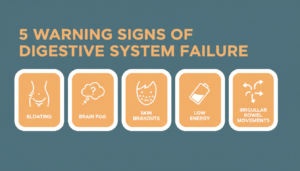
Before you dismiss this as something that doesn’t apply to you, pay attention to these warning signs.
If any of them sound familiar, your digestive system is likely stuck in a toxic backup cycle right now:
1. You feel bloated within an hour of eating — even small meals.
This is a direct sign that your body isn’t breaking down food efficiently.
The fermentation process is happening faster than digestion can keep up.
2. You experience brain fog or mental cloudiness, especially in the afternoon.
When your gut isn’t absorbing nutrients properly, your brain doesn’t get what it needs to function clearly.
This is one of the most overlooked signs of digestive dysfunction.
3. Your skin is dull, irritated, or prone to breakouts.
Your skin is often the first visible sign that your body is holding onto toxins it can’t eliminate.
Chronic skin issues that don’t respond to topical treatments are frequently rooted in gut health.
4. You swing between constipation and diarrhea with no clear pattern.
This unpredictability is a hallmark of gut dysbiosis and a sign that your intestinal lining is under serious stress.
5. You feel exhausted no matter how much you sleep.
When your liver can’t convert food into usable energy and your gut can’t absorb the nutrients your body needs, fatigue becomes a constant — regardless of how long you rest.
If three or more of these resonate with you, your body is signaling that the Gut-Liver Axis needs support.
The longer you wait, the harder it becomes to reverse the damage.
The Bottom Line: Your Digestive System Deserves Better Than “Just Living With It”
You were not designed to feel heavy, bloated, and drained every single day. The frustration you feel — the embarrassment, the exhaustion, the sense that your body has betrayed you — is not something you should just accept.
The toxic backup, the sluggish liver, the imbalanced gut — these are not permanent sentences.
They are signs that a system that was once working has gotten stuck, and with the right support, it can start moving again.
The first step is understanding what’s happening. The second step is actually doing something about it.
Ready to Finally Reset Your Digestive System?
If everything in this article sounds familiar — the bloating, the exhaustion, the feeling of being stuck — then it’s time to stop waiting and start taking action.
Finessa is a natural powder supplement specifically designed to target the Gut-Liver Axis — the exact system we discussed throughout this article.
Each scoop of Finessa works to:
✅ Boost bile production — Supporting your liver in creating the lubrication your intestines need to move waste out naturally
✅ Clear the toxic backup — Helping flush the buildup that’s been causing your bloating, brain fog, and skin issues
✅ Calm gut inflammation — Soothing the irritated intestinal lining that’s been driving the unpredictable cycle of constipation and urgency
✅ Restore gut balance — Feeding the good bacteria and starving the harmful ones that have taken over
✅ Revive your metabolism — Giving your liver the support it needs to turn food into energy again instead of storing it as bloat and belly fat
Finessa contains 8 clinically-studied natural ingredients
— including Dandelion Root, Milk Thistle, Cascara Sagrada, Turmeric, Probiotics, and Polyphenols
— all working together to support the exact two-way system your body needs to start digesting and eliminating properly again.
It’s simple to use: just mix one scoop into water or any beverage each morning.
No pills to swallow, no complicated routines.
Just one step that works with your body — not against it.
And here’s the part that makes trying Finessa completely risk-free: Finessa comes with a 180-day money-back guarantee.
That’s six full months to see results. If you’re not satisfied for any reason — even if you’ve used the entire supply — you can get a full refund. No questions asked.
👉 Click here to learn more about Finessa and claim your discount
Don’t spend another day feeling like a prisoner in your own body. Your digestive system can be reset. It starts with one scoop.
Disclaimer: This article is for informational and educational purposes only. It is not intended to diagnose, treat, cure, or prevent any disease. Always consult with a qualified healthcare professional before starting any new supplement or making changes to your health routine.
Leave a Reply